You already know reading is good for your child. But did you know that the simple act of reading a picture book together does far more than build vocabulary? It teaches your child how to feel what another person feels — and that skill, empathy, shapes how they treat their classmates, siblings, and friends for the rest of their lives.
Whether your child is in Pre-K or finishing up Grade 3, storytime is one of the most powerful tools you have. And the best part? It costs nothing but a little time.
When a child reads about a character who feels left out, nervous on the first day of school, or sad because nobody understands them, something important happens. They step into that character’s shoes in a completely safe way. No real stakes, no social pressure — just genuine emotional practice.
Reading Rockets, a national literacy resource, notes that reading aloud helps children develop social-emotional skills such as empathy, understanding big feelings, and navigating relationships (source). This matters especially in the early grades when children are still learning how to name their own emotions, let alone understand someone else’s.
Research published in PLOS ONE confirms that fiction reading causes gains in empathic skills — not just general awareness of others, but the ability to take another person’s perspective and respond with care (source). That is a skill your child will use every single day.
PBS Parents puts it simply: “Reading strengthens children’s social skills… and helps develop important psychological milestones like empathy.” (source)
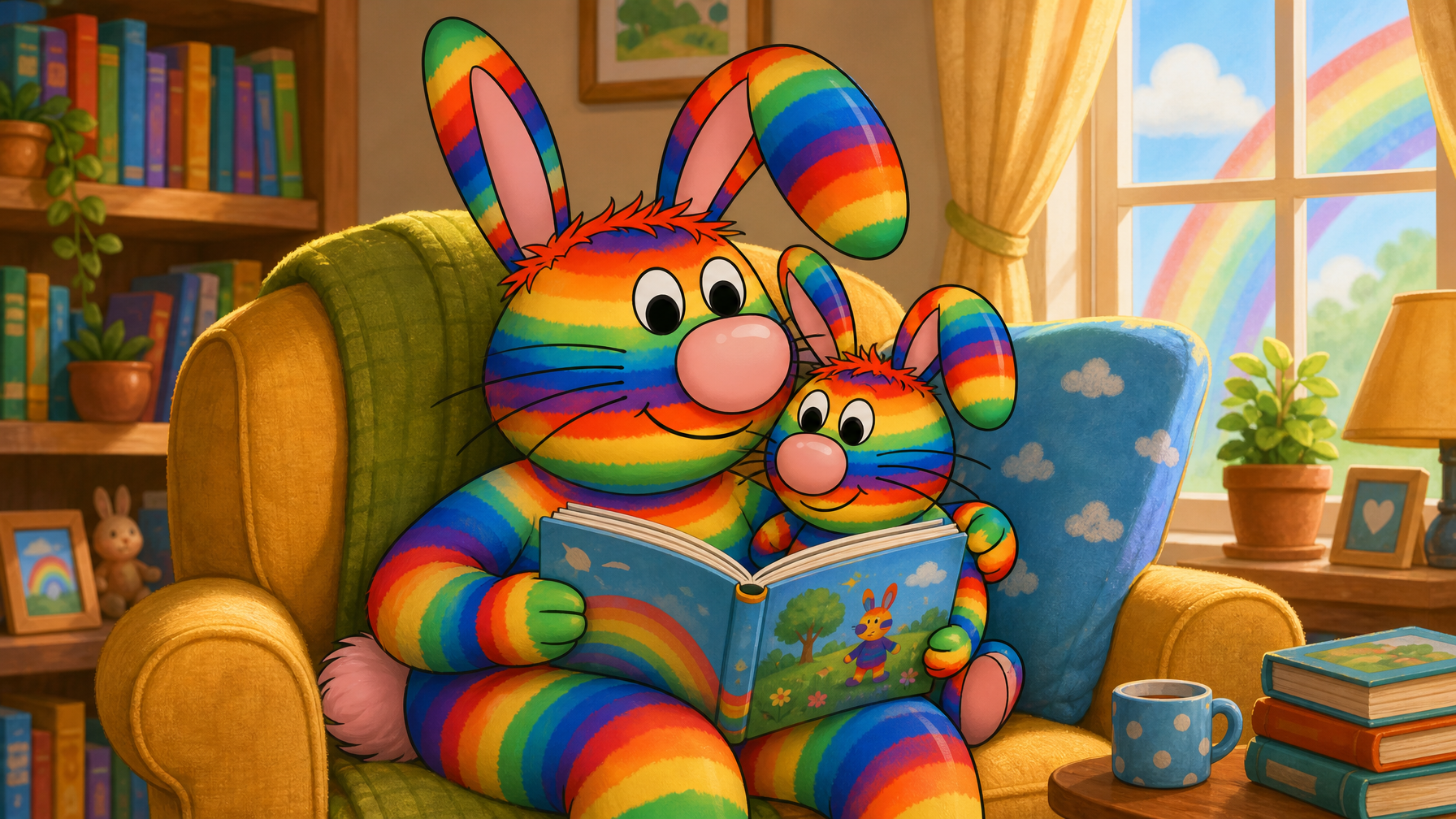
There is something special about reading together, rather than just having a child read alone. When you sit next to your child and share a story, a few things happen at once:
You model emotional response. When you gasp at a tense moment or smile at a kind act, your child watches your face. They learn that feelings are normal, that stories matter, and that caring about characters is something grown-ups do too.
You open the door to conversation. A simple question like “How do you think Rainbow Rabbit felt when the other rabbits laughed at him?” gives your child a chance to articulate emotions they might not have language for yet. According to San Diego Family Magazine, stories “help build a child’s ability to understand and practice empathy, social-awareness and self-management” — all core social-emotional learning skills (source).
You build a connection ritual. Shared reading creates consistent, predictable moments of closeness. For children who struggle with big feelings or social anxiety, that anchor is grounding. The story becomes a shared reference — a common language you and your child can return to.
New research from February 2026, published in The Conversation, found that parents who read to their 6-to-8-year-olds nightly saw meaningful boosts in both creativity and empathy compared to children who were not read to regularly (source). Nightly doesn’t have to mean long — even ten minutes counts.
Not all books work equally well for social-emotional learning. The stories that tend to make the biggest impact share a few things in common:
Books that center on characters who look or feel different, and who find belonging and friendship anyway, give children a framework for how to treat the kids around them who might also be different in some way. Those stories quietly answer the question: What do I do when someone doesn’t fit in?
If you want to bring more empathy and kindness into your child’s daily life, you don’t need a curriculum or a parenting plan. You just need a good book and fifteen minutes before bed.
Look for stories where the main character wrestles with a real feeling — loneliness, fear, the ache of not belonging — and finds a way through it. Let your child see you care about the characters. Ask one or two questions, then let the conversation go wherever it goes.
The habits your child builds now — the instinct to check in on a classmate who seems sad, to include someone sitting alone, to speak up when something isn’t fair — those habits start with the stories they grow up on.
Explore the Rainbow Rabbit storybook world and find screen-free, story-driven resources for your family at therainbowrabbit.com.