Want to teach kindness at home without lectures or charts? Kindness isn’t something kids just absorb by osmosis. Like reading or tying shoes, it’s a skill, and it’s one that grows fastest with a little daily practice at home.
Here are five simple, screen-free ways to teach kindness at home with your Pre-K through Grade 3 child.
When your child is upset that a friend looked or acted “different,” resist jumping straight to a lesson. Start by naming what they’re feeling: confused, unsure, maybe even a little uncomfortable. Kids build empathy for others once they’ve learned to sit with their own feelings first.
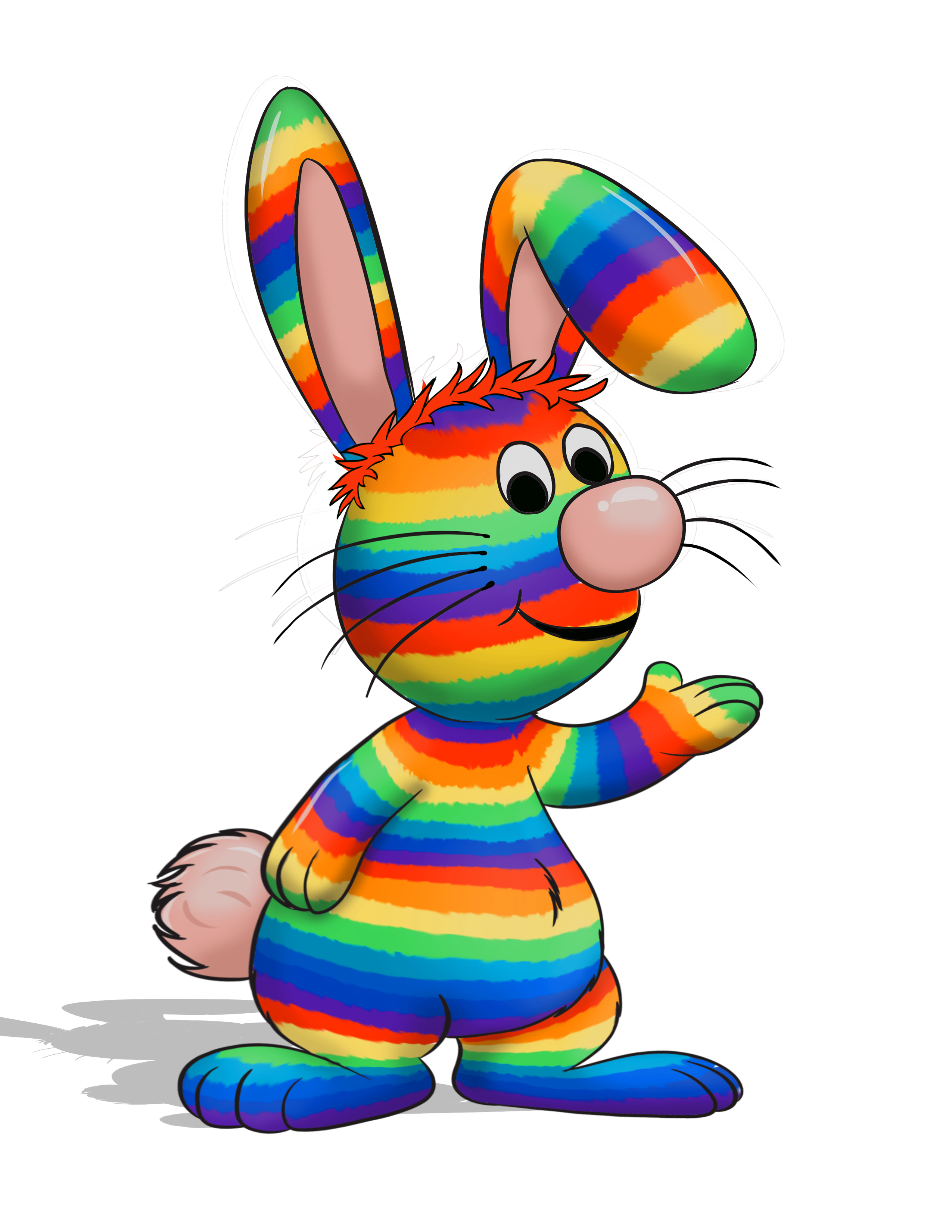
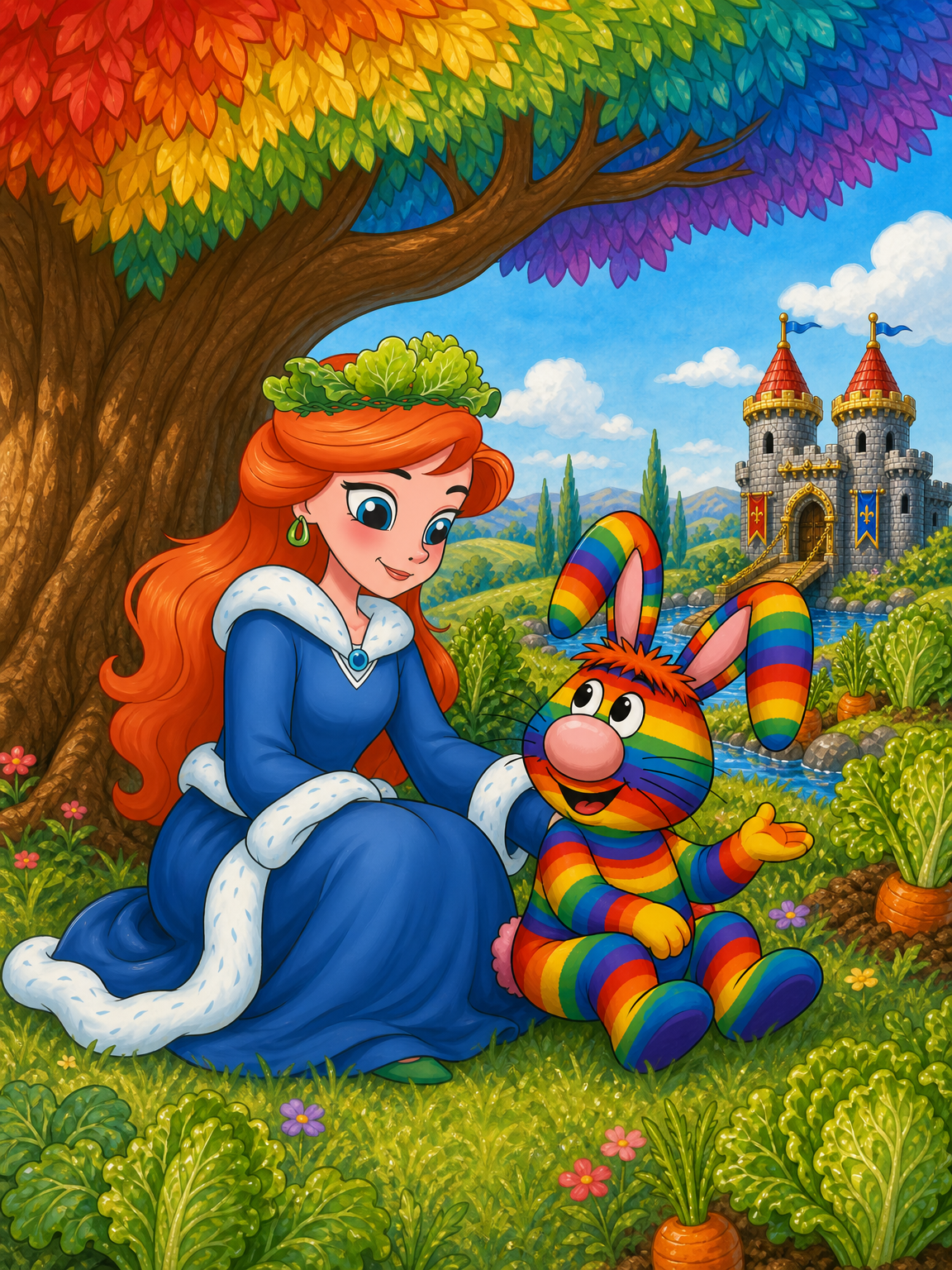
Kids tune out when a story feels like it’s lecturing them. Stories where a character’s differences turn out to be their strength, like Rainbow Rabbit’s, let kids draw their own conclusions instead of being told what to think.
Encourage a simple habit: when someone seems different or unfamiliar, take a second look before forming an opinion. This is the exact moment in Rainbow Rabbit’s world where the Princess sees past how he looks and gets to know who he is. It’s a small reframe that sticks.
Young kids do best with concrete, hands-on examples. Coloring, drawing, or acting out a kind moment (sharing, including someone, standing up for a friend) cements the idea far better than simply being told “be kind.”
Point out something unique about your child, and something unique about a friend or sibling, and say plainly that it’s a good thing. Kids notice what parents praise. If differences are framed as interesting rather than “other,” acceptance becomes the default.
If you’re looking for a hands-on way to bring these lessons home, our Rainbow Rabbit Storytelling Coloring Book is built around exactly this theme: a rabbit who looks different from everyone else, and the friends who choose to see him for who he is.