Parents hear “thank you” all day and still wonder if kids mean it. Teaching kids gratitude is less about perfect manners and more about small, repeatable habits that help children notice kindness, name what matters, and feel connected to the people around them.
When gratitude shows up as a daily practice, it supports social-emotional learning at home. Kids practice noticing others, sharing appreciation, and shifting attention from “what’s missing” to “what’s here.” That mindset pairs well with kindness, empathy, and inclusion in everyday family life.
Young children (Pre-K through early elementary) learn feelings through practice, not lectures. Gratitude is a skill you can coach the same way you coach taking turns or using calm words.
Simple gratitude routines help kids:
You do not need a complicated chart. You need short moments that repeat until they feel normal.
For more ways to grow warmth at home, see 5 Simple Ways to Teach Kindness at Home.
At dinner or bedtime, each person names three things they are thankful for. Start concrete for little kids: a snack, a hug, a favorite book. Over time, gently stretch toward people and experiences: “I’m thankful Grandma called” or “I’m thankful my friend shared crayons.”
Keep it light. If a child says “pizza” three nights in a row, celebrate the honesty and model a deeper answer yourself.
Families who use this kind of focus-on-what-you-have practice help kids build contentment instead of constant “I want” energy. Practical ideas in that spirit appear in guides like Focus on the Family’s gratitude parenting article.
When someone does something kind, narrate it: “Dad packed your lunch. That took time. Want to say thanks?” Or: “Your teacher waited so you could finish. That was patient.”
This turns manners into meaning. Kids learn gratitude is about seeing effort, not only saying a scripted phrase.
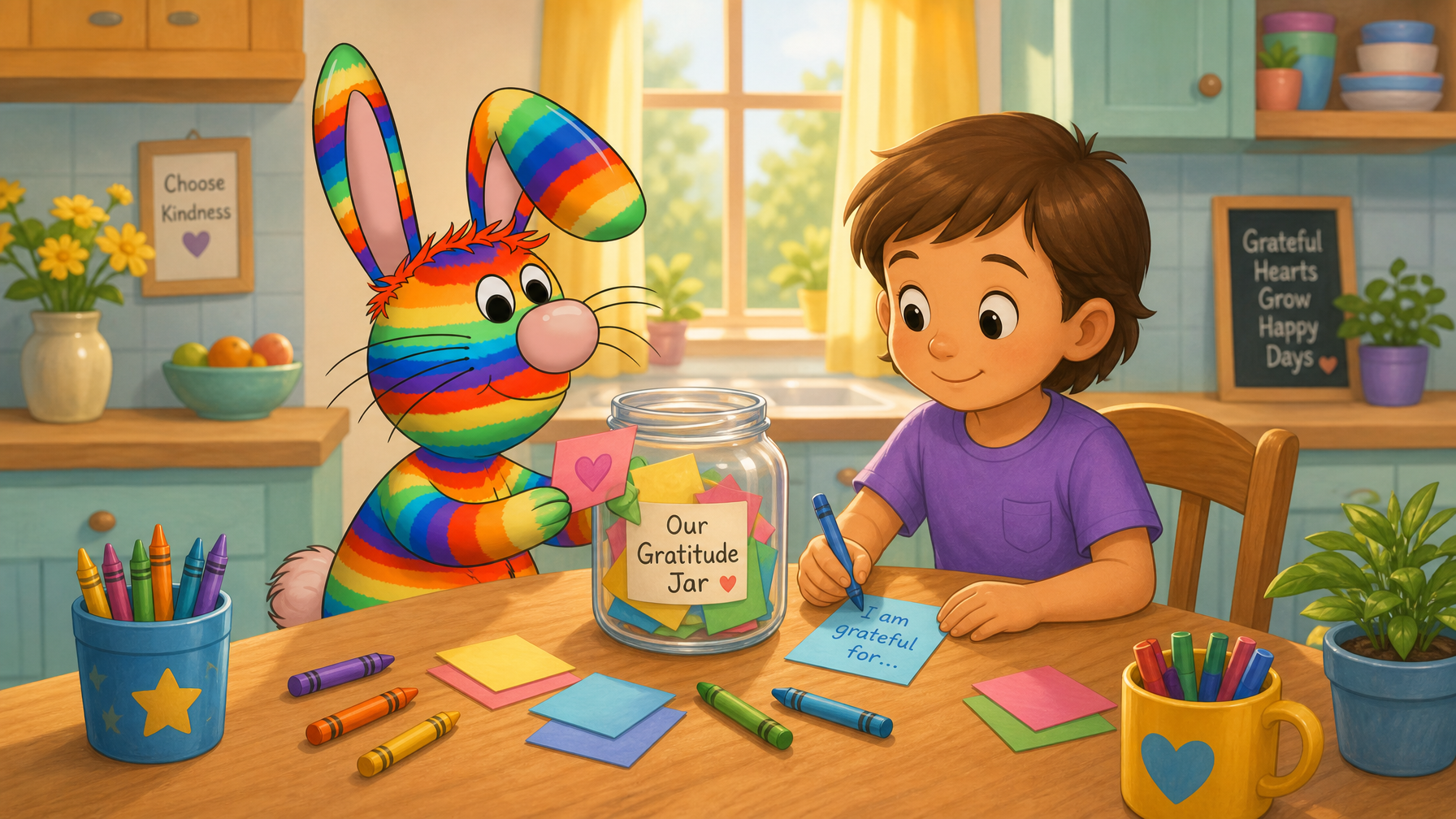
Put a jar on the counter with scrap paper and crayons. Once a day, each person drops in one note: a person, a moment, or a small win. On Fridays, read a few notes together.
For kids who love drawing more than writing, pictures count. A scribbled rainbow next to “Mom” is real gratitude practice.
Creative, screen-free moments like this also support emotional intelligence. If you want more activity ideas, try 5 Screen-Free Activities That Grow Emotional Intelligence.
Manners matter. Meaning makes them stick. After “thank you,” add one short reason: “Thank you for helping me zip my coat. That made me feel ready.”
Model the same structure when you thank your child: “Thank you for waiting. That helped our morning stay calm.” Kids copy the tone they hear most.
Picture books and short family stories are perfect for gratitude talk. Pause and ask: “Who was kind in this story?” “How do you think that character felt?” “What could we say thank you for if we were there?”
Storytime is already a connection ritual. Adding one or two curiosity questions turns reading into social-emotional practice. For more on that link, read How Storytelling Builds Empathy in Young Children.
Skip long lectures. Use tiny prompts:
If your child resists, stay curious instead of corrective. Some days the answer is “nothing.” That is okay. Offer your own example and try again tomorrow. Consistency beats intensity.
Also protect the mood. Gratitude should feel warm, not like a quiz kids can fail. Smile, keep turns short, and end on connection (a hug, a silly face, or one more page of a book).
Pick one habit this week. The three-thankful-things game or the gratitude jar usually works first because both are visual, quick, and shared. After seven days, notice whether your child starts spotting helpers without a prompt. That is the win.
When you want a calm, creative way to keep talking about feelings and kindness, visit therainbowrabbit.com for stories, tools, and family-friendly resources that support empathy and belonging at home.
Gratitude grows the same way kindness does: one small, repeated moment at a time.