Looking for screen-free activities for kids that actually build emotional skills? Your child just dissolved into tears because a puzzle piece would not fit. Last week, it was a meltdown over the wrong color cup. Next week, something new will set them off. And you are standing there thinking: how do I actually help them get better at this?
Here is the reassuring truth about screen-free activities for kids. Emotional intelligence is a skill. That means recognizing, naming, and managing feelings. Children also learn to understand how others feel. Nobody is simply born with it or without it. Kids build it through practice, in small repeated moments, the same way they learn to ride a bike.
Here is even better news. Some of the most effective ways to build it need nothing more than what is already in your home. And they need no screen in sight.
The American Academy of Pediatrics has studied play and development for years. Free, unstructured play builds social and emotional skills. Executive function and creativity grow in that same space. That kind of play unfolds without a device (AAP, Pediatrics 2018).
A 2024 NIH study looked at social-emotional skill work in kindergarteners. Programs that build emotional awareness led to clear gains. Kids improved at emotional regulation and social behavior (PMC, NIH, Dec 2024).
The flip side is also worth knowing. In January 2026, the AAP updated its Digital Ecosystems policy. Passive screen use in early childhood is linked with weaker self-regulation and emotional development (AAP Pediatrics, Jan 2026).
None of this means screens are the enemy. But time away from them still matters. Hands-on, imaginative, relational play does real developmental work.
Below are five screen-free activities for kids that deliver exactly that.
Write emotion words on slips of paper. Use words like happy, nervous, surprised, proud, confused, and left out. Then take turns acting them out without words.
This is one of the simplest high-impact games for ages four to eight. Acting out “nervous” means your child must understand how nervous feels from the inside. Guessing correctly means they must read a face and body. Both skills sit at the core of emotional intelligence. Keep the words age-appropriate, and add new ones as they grow.
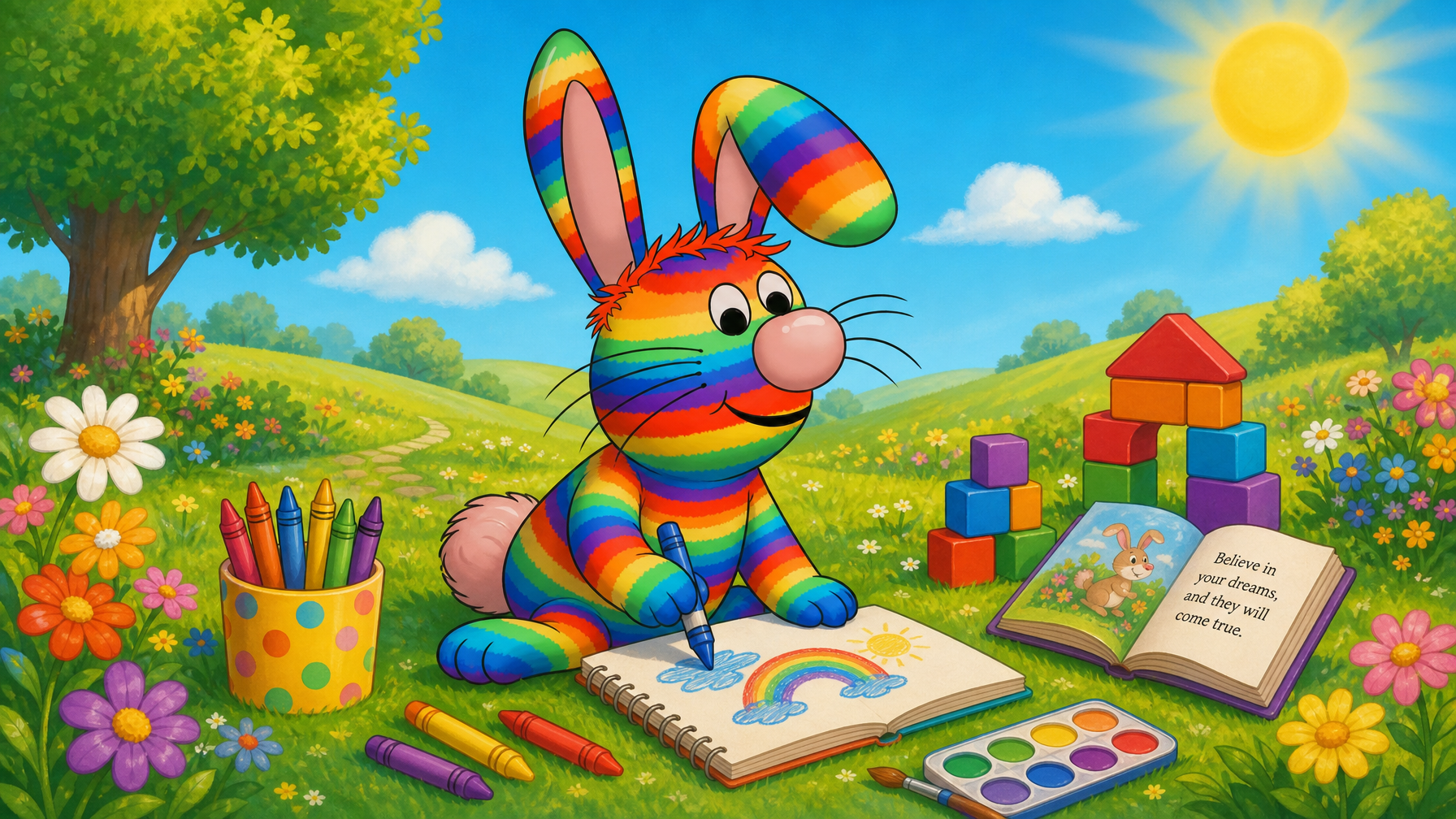
Pick a character. Use a real one, an imaginary one, or one from a favorite book. Then take turns building a story out loud. Try: “Rainbow Rabbit felt nervous because it was his first day in a new place. What do you think he did?”
Let your child decide. Allow the story to go somewhere unexpected. You are really helping them practice perspective-taking. They imagine what a character feels and why they choose what they choose.
Research points to this kind of narrative play as a bridge to real-world empathy. When children step into a character’s feelings through storytelling, they build emotional vocabulary. That understanding transfers into their relationships. For more on that theme, see our guide on when your child feels different.
Ask your child to draw what “frustrated” looks like. Or ask them to draw a character’s face when they feel left out. No artistic skill is required. The point is to put a feeling outside the body and look at it.
After they finish, ask questions. “What shape are the eyebrows? How is the mouth shaped? Which color did you pick, and why that one?” This kind of talk does two things at once. Emotional vocabulary grows. Children also get a creative way to process feelings instead of only reacting.
Check out the brand new Rainbow Rabbit Storybook!
Take a scenario your child has actually struggled with. Someone may have taken their toy. A friend may have left them out of a game. Embarrassment may still sting from last week. Play it out together. You take one role, and your child takes the other. Then switch.
This is not about rehearsing the “right” answer. The goal is letting your child feel both sides in a safe space. Keep the stakes low while you talk it through together. Over time, they build a mental library of responses before the real moment hits.
Pick a picture book with a character who faces a real emotional challenge. Go slowly through the pages. Pause at moments of tension and ask: “How do you think she feels right now? Why? What would you do?”
The pause is the work. Reading shifts from passive to active. Your child is not only receiving a story. They are processing it. Guided read-alouds are one of the most research-backed tools parents have. And they work from age two through eight and beyond. You can also try the Rainbow Rabbit Storytelling Coloring Book on Amazon as a screen-free follow-up.
Emotional intelligence does not get built in a single conversation. One good afternoon of play will not finish the job either. The skill compounds.
Each time your child names a feeling out loud, they add a brick. Watching a character navigate something hard with you adds another. Playing a game that asks them to read someone else’s face grows the foundation too. That foundation carries them through school, friendships, and everything beyond.
These screen-free activities for kids require no special supplies. Curriculum is optional. Heavy prep is not required. What they need is you, a little time, and a willingness to slow down. That space is where the messy, important work of growing up emotionally happens.
At Rainbow Rabbit, everything we create is built around this same idea. Our storybooks and educational programs help children grow into kind, empathetic people through stories, play, and connection. Explore our world at therainbowrabbit.com. Find resources designed to support that journey, one story at a time.