The new backpack is ready. The school supplies are labeled. But what about the skills that do not fit in a backpack. The ones that will determine whether your child walks into that first day feeling ready to connect, share, and belong?
Social skills are not a personality trait some kids are born with. They are learned. And the weeks before school starts are one of the best times to practice them at home, in low-stakes, everyday moments that do not feel like a lesson at all.
Here is what matters most, and what you can do before the first bell rings.
Most back-to-school checklists focus on the cognitive side: Can your child count to 20? Do they know their letters? But teachers consistently report that children who struggle most in the early weeks are not the ones behind academically. They are the ones who do not know how to take turns, handle a disagreement, or ask for help.
The Collaborative for Academic, Social, and Emotional Learning (CASEL) defines social-emotional learning (SEL) as the process through which children learn to understand and manage emotions, build positive relationships, and make responsible decisions. Research cited by the New York State Education Department found that students who received SEL instruction showed achievement scores 11 to 13 points higher, improved classroom behavior, and reduced emotional stress. Compared to students who did not (NYSED/CASEL).
The foundation for all of that starts at home, long before the school year does.
You do not need a curriculum. These fit naturally into everyday family life.
1. Taking turns in conversation. Classroom participation depends on knowing how to wait, listen, and respond. Not just talk. Practice this at dinner: one person shares something about their day, everyone else listens until they finish, then someone else goes. It sounds simple. For a four-year-old, it takes real effort. That effort is the practice.
2. Naming feelings out loud. When your child can put a word to what they feel. Frustrated, nervous, excited, left out. They are far better equipped to handle it. Build this into small moments: “You seem disappointed we can’t go to the park. That makes sense.” Over time, they learn to do this themselves. At school, a child who can say “I feel left out” instead of acting out is one who their teacher can actually help.
3. Asking for help. Many children freeze when they need assistance and do not know how to ask. Role-play it at home. Pretend you are the teacher, let your child practice saying “Excuse me, I need help with this.” It feels silly at home. It pays off enormously in September.
4. Recovering from small disappointments. Lost a game. Did not get the seat they wanted at the table. A friend picked someone else to be their partner. These moments happen every single day at school. The child who can take a breath, regroup, and move on has a massive advantage. You build this by letting small frustrations happen at home, coaching through them, and avoiding the impulse to fix everything immediately.
One of the most effective tools parents have is also one of the simplest: read together.
When a child hears a story about a character who feels nervous on a new adventure, or who has to figure out how to make a friend who is different from them, something clicks. They process the emotion at a safe distance. They try on the feeling before they ever have to live it.
This is why character-driven stories built around social-emotional themes are so powerful in the months before school starts. Not because they teach rules, but because they let children practice feeling. Through the characters they meet on the page.
Stories that celebrate uniqueness, model kindness, and show characters working through real feelings give children a vocabulary and an emotional roadmap they carry right into the classroom.
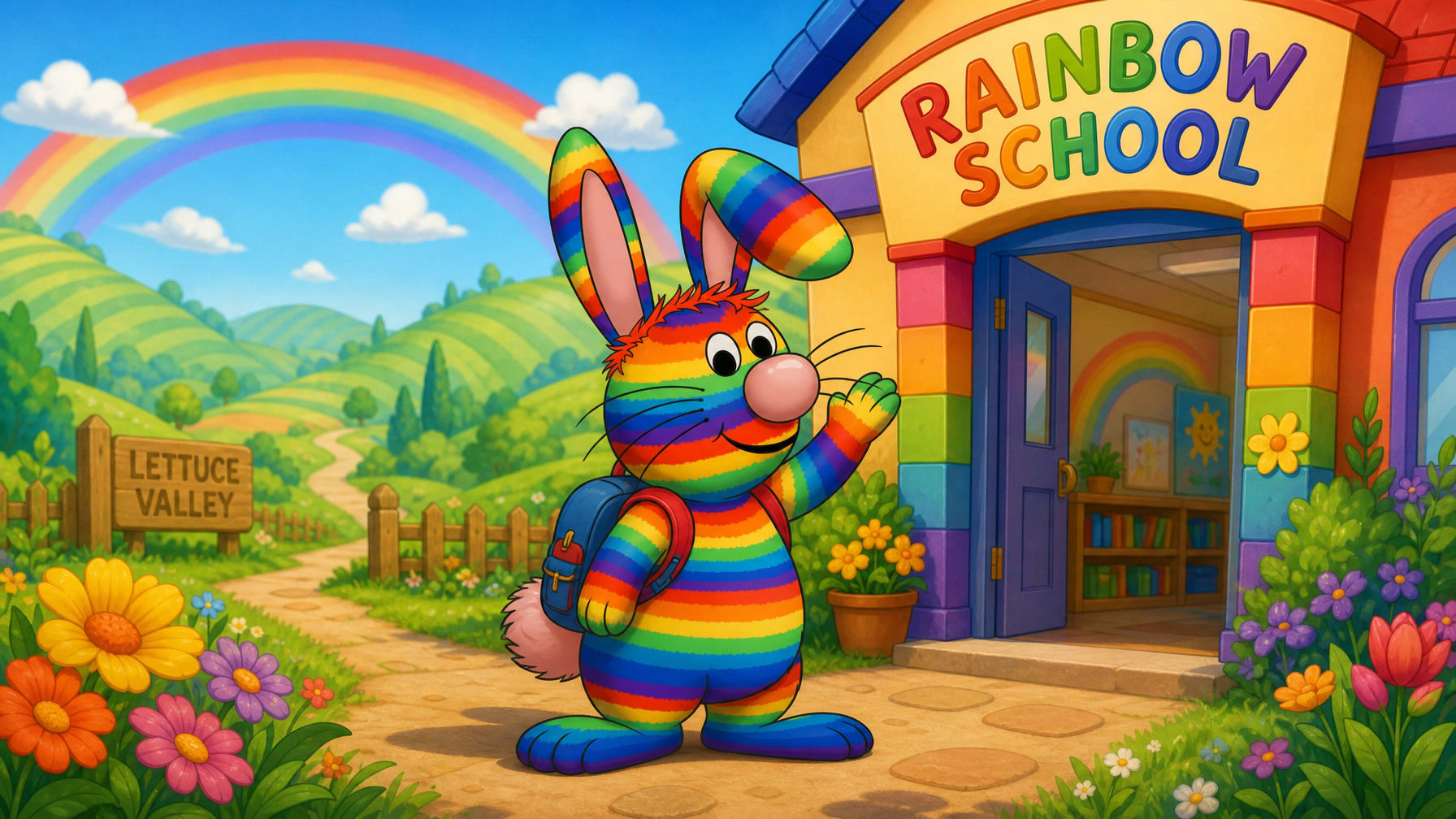
If you are looking for a screen-free activity that doubles as SEL practice, the Rainbow Rabbit Storytelling Coloring Book is a great place to start. Your child colors illustrated scenes from a story about a rabbit who learns that what makes him different is exactly what makes him special. While you guide the conversation about feelings, friendship, and belonging. Available now on Amazon.
The backpack is ready. This is how you fill the rest of what they’ll need.