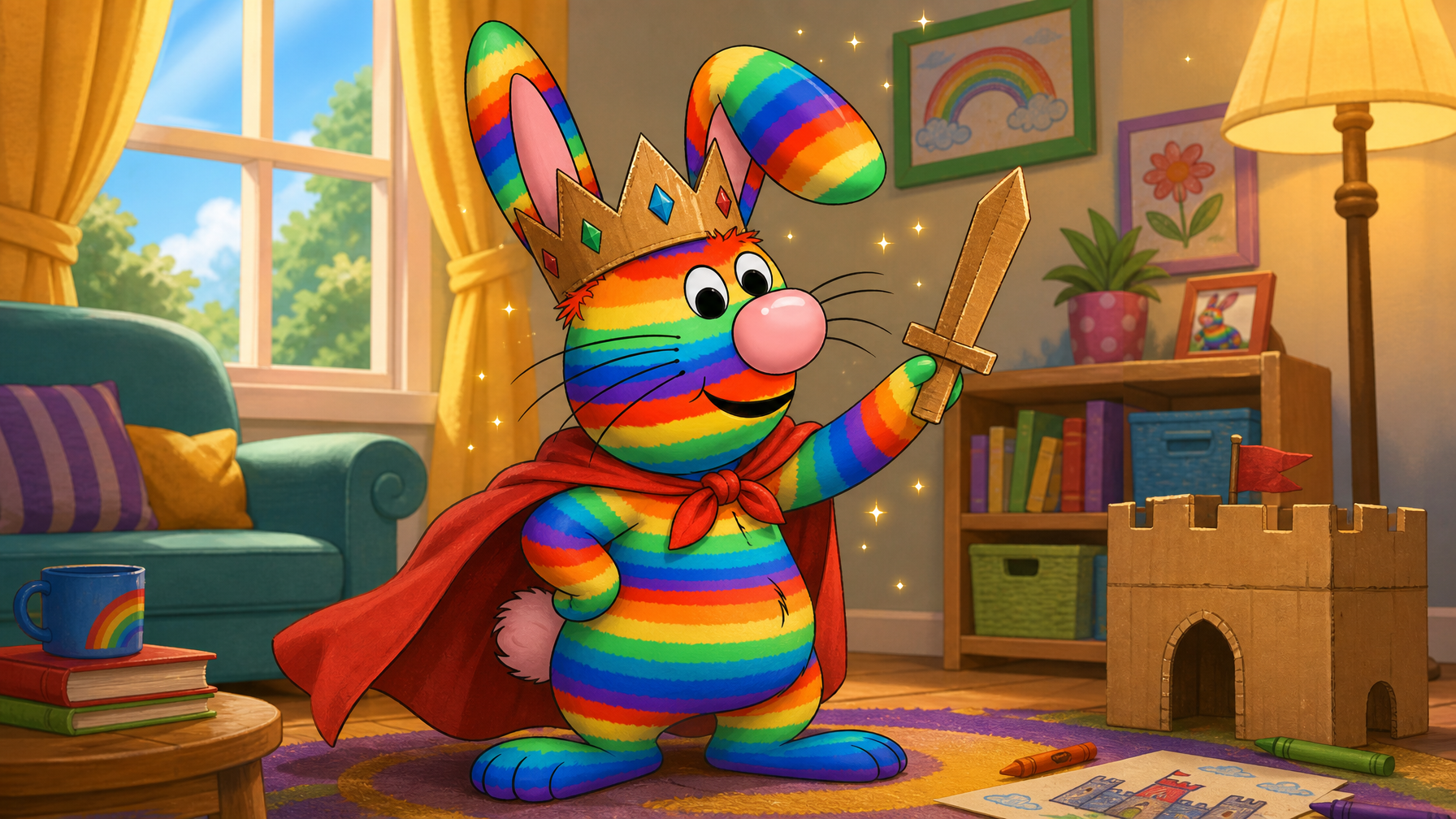
Your child drapes a dish towel around their shoulders, picks up a stick from the backyard, and announces they are a brave knight on a quest to rescue the stuffed animals. You smile, maybe grab your phone for a photo, and think nothing more of it.
But something important is happening in that moment. Something that a screen, however educational, cannot replicate.
Pretend play. The unstructured, imaginative, “let’s make believe” kind. Is one of the most powerful tools young children have for developing empathy, social awareness, and emotional intelligence. And it is quietly disappearing from childhood, crowded out by passive screen time and scheduled activities.
Here is why it matters, and what you can do to make space for more of it.
When a child plays pretend, they are not just having fun. They are practicing one of the most complex cognitive skills a human being can develop: perspective-taking. The ability to step into someone else’s experience and understand how they feel.
A child pretending to be a parent, a firefighter, or a character from a favorite story has to think about motivations, feelings, and consequences from a point of view other than their own. That mental exercise is exactly what empathy is built from.
The Child Mind Institute notes that pretend play has important benefits for the development of social and emotional skills, including the ability to work through complex feelings, understand the perspectives of others, and practice resolving conflicts (source). These are not abstract skills. They are the ones your child will call on every time a classmate is upset, a friend feels left out, or a sibling wants a turn.
The American Academy of Pediatrics, in its landmark report on the power of play, describes child-led, imaginative play as essential to healthy development, noting that it builds executive function, self-regulation, and the social-emotional competencies that underpin lifelong wellbeing (source).
In short: the knight with the dish towel cape is building the exact same skills your child needs to be a good friend, a caring classmate, and a resilient human being.
Screens are not inherently bad. A well-chosen show or app can spark curiosity, introduce new ideas, and even support vocabulary development. But passive screen time and unstructured pretend play develop different things.
Research from the Canadian Paediatric Society found that excessive screen time in early childhood can negatively affect social skills and interfere with the social learning that happens through real-world interaction and play (source). When a child watches a character navigate a problem, they observe it. When a child plays out that same scenario with blocks, dolls, or a friend in the backyard, they practice it.
The difference is the difference between watching someone ride a bicycle and learning to ride one yourself.
This is especially true for empathy. A child who spends forty-five minutes negotiating with a sibling about who gets to be the dragon in an imaginary game learns something a screen cannot teach: what it actually feels like to give something up so someone else can feel included.
You do not need to overhaul your routine. Small, intentional shifts open up room for the kind of play that builds empathy and social skills.
Step back and let boredom work. The impulse to fill every quiet moment with an activity is understandable, but boredom is often the spark that ignites creative play. When your child says “I’m bored,” resist the urge to hand them a device. Wait five minutes. See what they invent.
Keep open-ended materials accessible. Cardboard boxes, scarves, building blocks, art supplies, and old clothes for dress-up invite imagination in a way that single-purpose toys do not. The fewer instructions something comes with, the more creative thinking it requires.
Play alongside them. Children, especially in the Pre-K years, learn social scripts through play with adults and older kids. When you sit on the floor and become a character in their story, you model how to take turns, listen to another person’s ideas, and adapt your plan when someone else has a different one.
Use stories as a launching pad. A book your child loves is a ready-made world they can step into. After reading together, ask: “What do you think happens next?” or “What would you do if you were Rainbow Rabbit?” Then follow their lead.
At Rainbow Rabbit, the whole storybook world is built around this idea: that children learn who they want to be by practicing it, through play, through stories, and through the small everyday moments where kindness becomes a habit.
Explore screen-free resources, the Rainbow Rabbit storybook, and tools for parents and educators at therainbowrabbit.com.