A playground bump. A snatched crayon. A slammed door. Then the grown-up script: “Say you’re sorry.” The words come out flat. Nobody feels better.
If you want to teach kids to apologize in a way that sticks, skip the rush. A real apology is a kindness skill. It helps a child notice another person’s feelings, own their part, and try a repair. That is social-emotional learning you can practice at the kitchen table.
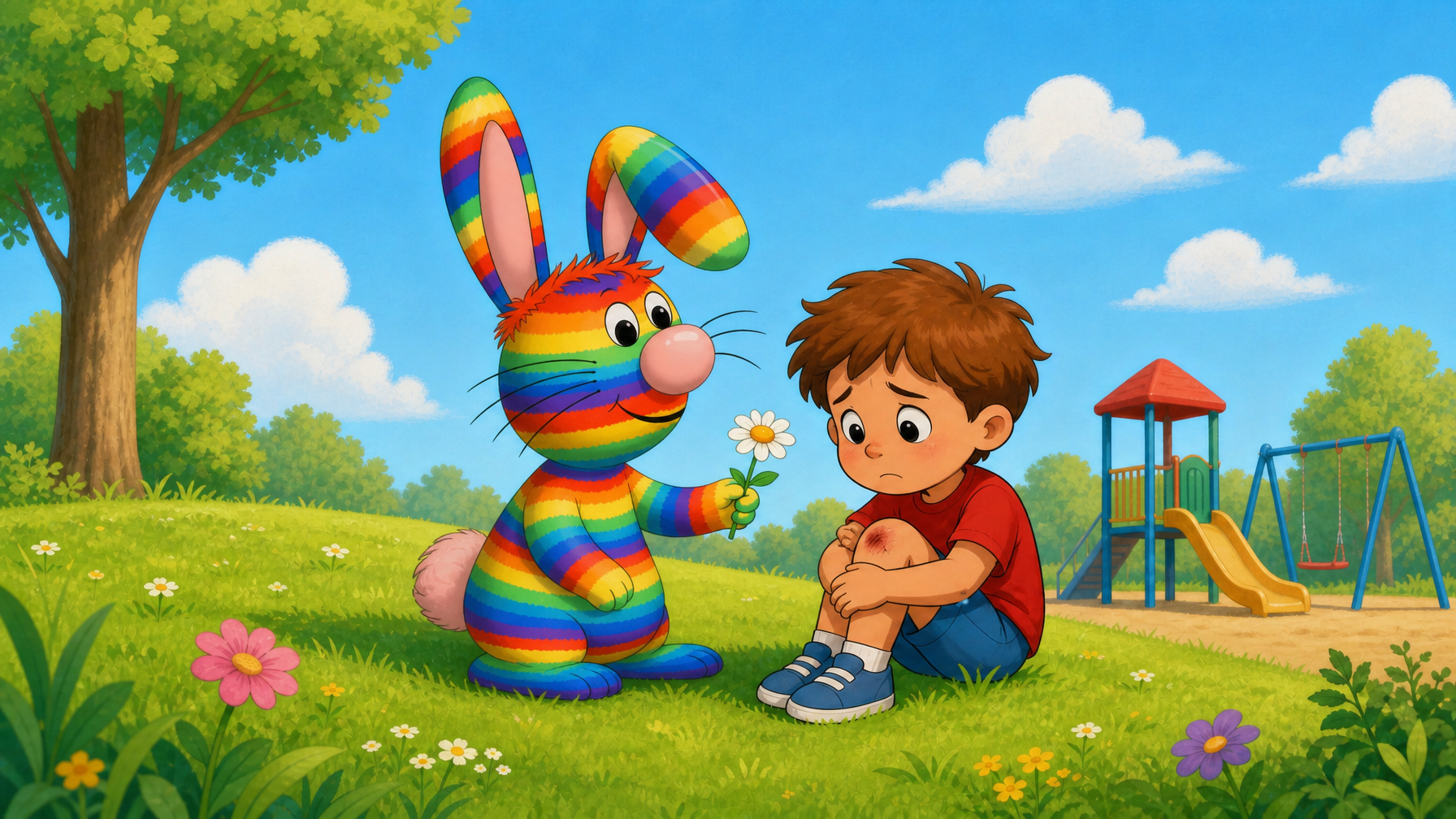
Stories help too. When kids follow Rainbow Rabbit through a hard moment, they rehearse the same moves: notice the hurt, stay with the person, make it right.
Young children can copy the word “sorry” long before they understand it. PBS KIDS for Parents puts it plainly: an apology should repair a connection, not just fill the silence.
A rushed “sorry” also skips the hard part. Today’s Parent notes that kids (and adults) dodge responsibility because admitting a mistake feels shameful. The brain looks for an out: “It was an accident.” “They started it.”
Wait until bodies are calm. Then name two things:
You can still set a limit in the moment (“Hands stay gentle”) without forcing a speech. The apology comes after the storm.
This pairs well with how storytelling builds empathy and simple ways to teach kindness at home. Kids learn the feeling first. The words follow.
Former teacher JoEllen Poon popularized a classroom stem that Today’s Parent shares:
Keep it short for Pre-K through Grade 3.
“I’m sorry for grabbing the marker. This is wrong because you were using it. Next time I will ask first.”
PBS adds one more piece: ask how you can help. A hug, a rebuilt block tower, or handing the toy back counts more than a mumbled word.
Practice when nothing is on fire. Role-play with stuffed animals. Pause a picture book and ask, “What could this character say now?” Rainbow Rabbit stories work well here because the characters stay kind while they work through a mistake.
Model it yourself. “I’m sorry I snapped about the shoes. That was unfair. Next time I’ll take a breath first.” Kids copy the repair they see.
Refusal does not mean a cold heart. It often means shame, confusion, or leftover anger. Stay with the facts. “You pushed. That hurt. We’ll try again when you’re ready.” Then coach a repair they can do with their hands: get ice, pick up the crayons, sit nearby.
PBS also reminds parents that sorry is not for every moment. A child does not owe an apology for saying no to something unsafe, or for having a feeling. Teach the difference: own the action, keep the feeling.
Forgiveness is not a prize they can demand. The goal is responsibility, not a clean slate on demand.
If you want a screen-free way to keep practicing, color a scene together and talk through what each character might say. The Rainbow Rabbit Storytelling Coloring Book on Amazon gives families a calm, hands-on place to rehearse kindness after a hard moment.
One sincere repair beats ten empty sorrys. Start with one line tonight, then add the rest as they grow.