A storytelling coloring book for kids does more than keep little hands busy — it builds focus, language, emotional intelligence, and creativity all at once. Here’s what the research says and why it matters for your child’s development.
Coloring sharpens fine motor skills, focus, and emotional regulation in children ages 3 to 9. Storytelling builds language, empathy, and imagination. When you bring both together in a storytelling coloring book for kids, the developmental benefits multiply. Research consistently backs this up, and the best part is that all it takes is a book and some crayons.
The average child under age 8 spends over two hours per day on screens, and that number rises significantly on weekends. While screens have their place, pediatric experts and child development researchers agree: unstructured, hands-on creative time is essential for healthy growth.
Screen-free activities support cognitive flexibility, emotional resilience, and problem-solving in ways that passive screen consumption simply cannot. The American Academy of Pediatrics recommends limiting screen time for young children and replacing it with activities that involve physical engagement and imaginative play.
Coloring and storytelling check both boxes, and they require zero batteries.
A crayon and a coloring book may look simple, but what happens developmentally is anything but.
Gripping a crayon and filling in shapes trains the small muscles in a child’s hands and fingers. According to Scholastic, these fine motor movements directly prepare children for handwriting and other school-readiness tasks.
Coloring requires a child to sit with a task, make decisions about color choices, and follow through from start to finish. This builds sustained attention, a skill that carries directly into the classroom. A 2026 review by MamaBear Books highlights how the structured nature of coloring pages gives young minds targeted practice without overwhelming them.
Choosing colors, working at a steady pace, and completing something beautiful is genuinely calming for young children. Montessori Hollywood describes the process as meditative, helping kids decompress from the pressures of school and daily routines.
Coloring teaches children to associate color names with the world around them. And despite the myth that coloring books stifle creativity, NPR’s education team found the evidence leans toward a balance: coloring books and blank paper work best together, each offering different developmental value.
Stories are how children make sense of the world, and the research behind storytelling in early childhood is remarkably consistent.
When children hear or engage with stories, they absorb new vocabulary, sentence structures, and communication patterns. BookTrust’s early childhood specialist Jan Dubiel notes that stories sit at the heart of how children represent and communicate their own ideas, knowledge, and feelings.
Stories introduce children to characters who feel different, look different, or face challenges. Following a character through those experiences teaches children to identify emotions and consider perspectives beyond their own. This is empathy in practice — built through narrative rather than instruction.
A good story presents a problem and a resolution. Children who engage with stories regularly develop stronger creative thinking and begin to apply story logic to real-world situations. Accelerate Learning’s research confirms that story-based learning is one of the most effective and engaging approaches in early childhood education.
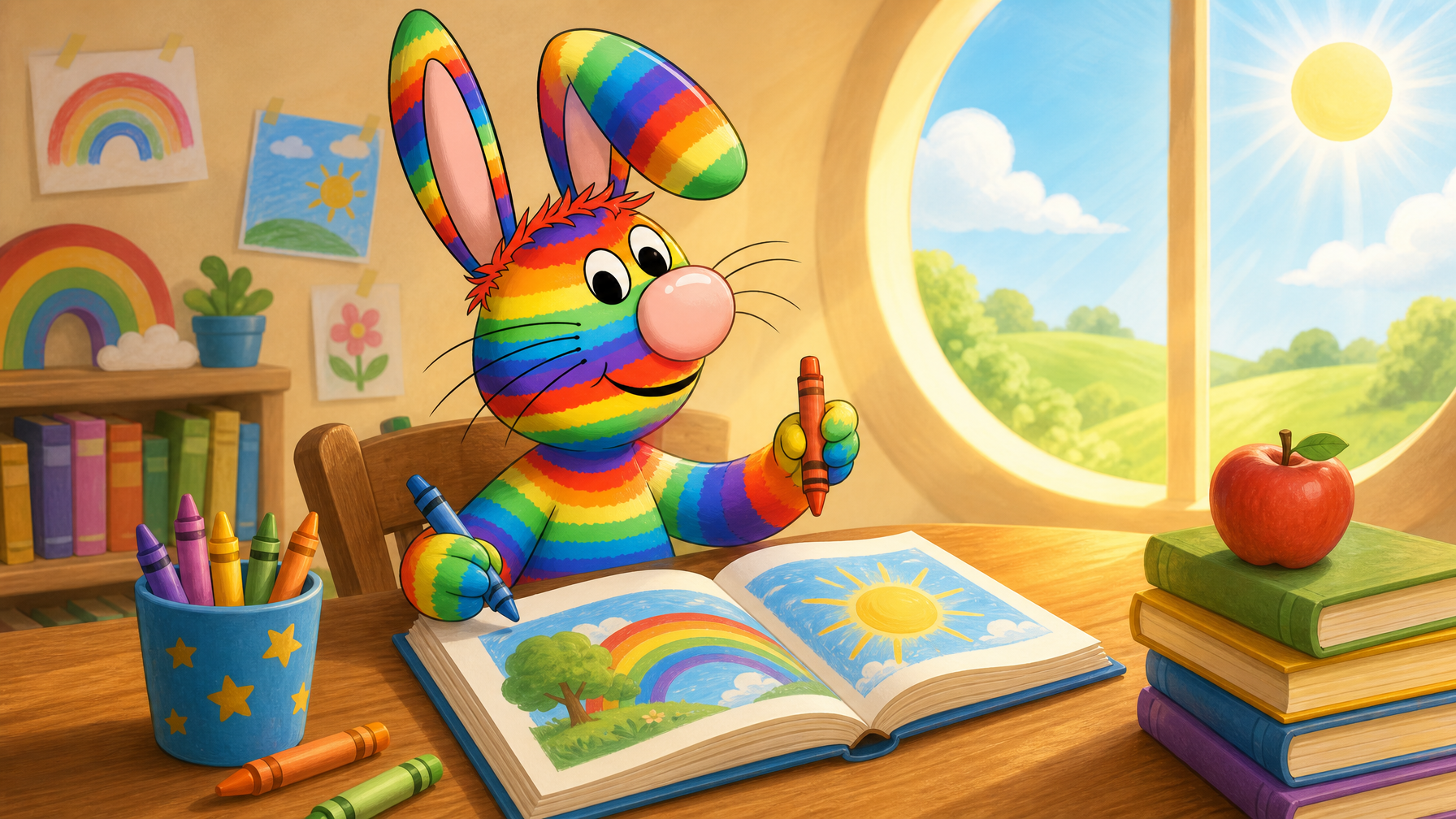
A storytelling coloring book for kids brings the benefits of both activities into a single experience. Children don’t just read or hear a story — they inhabit it, color it, and make it their own. That act of visual interpretation deepens comprehension and emotional connection to the narrative.
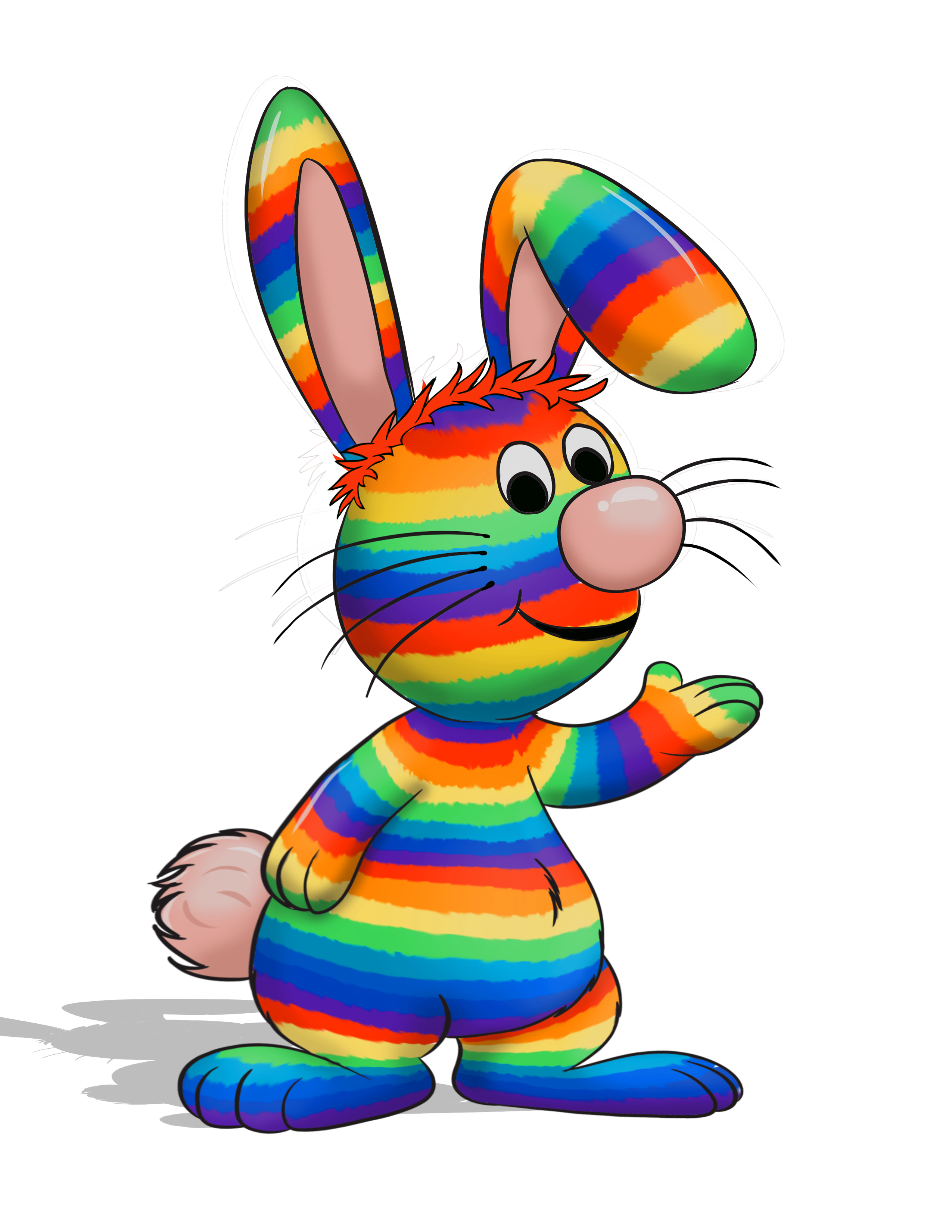
It also creates a natural conversation starter between parent and child. “What color do you think Rainbow Rabbit feels today?” opens the door to discussions about emotions, self-expression, and kindness in a way that feels playful rather than instructional.
The Rainbow Rabbit Storytelling Coloring Book is built around exactly this idea. The story follows Rainbow Rabbit, a rabbit who stands out because of his colorful stripes, and his journey to find happiness and belonging. Children color the pages while the story unfolds, making the themes of kindness and self-acceptance feel personal and vivid. Find it on Amazon here.
The research is clear: coloring and storytelling are two of the most developmentally rich, screen-free activities available to young children. Together, they build the fine motor skills, focus, language, empathy, and imagination that lay the foundation for lifelong learning.
A storytelling coloring book for kids is one of the simplest, most effective tools a parent can reach for, and Rainbow Rabbit was created with exactly that mission in mind.
Ready to bring the magic to your little one? Get the Rainbow Rabbit Storytelling Coloring Book on Amazon.
Discover the magic of learning with Rainbow Rabbit, explore a world where every child’s imagination is celebrated.