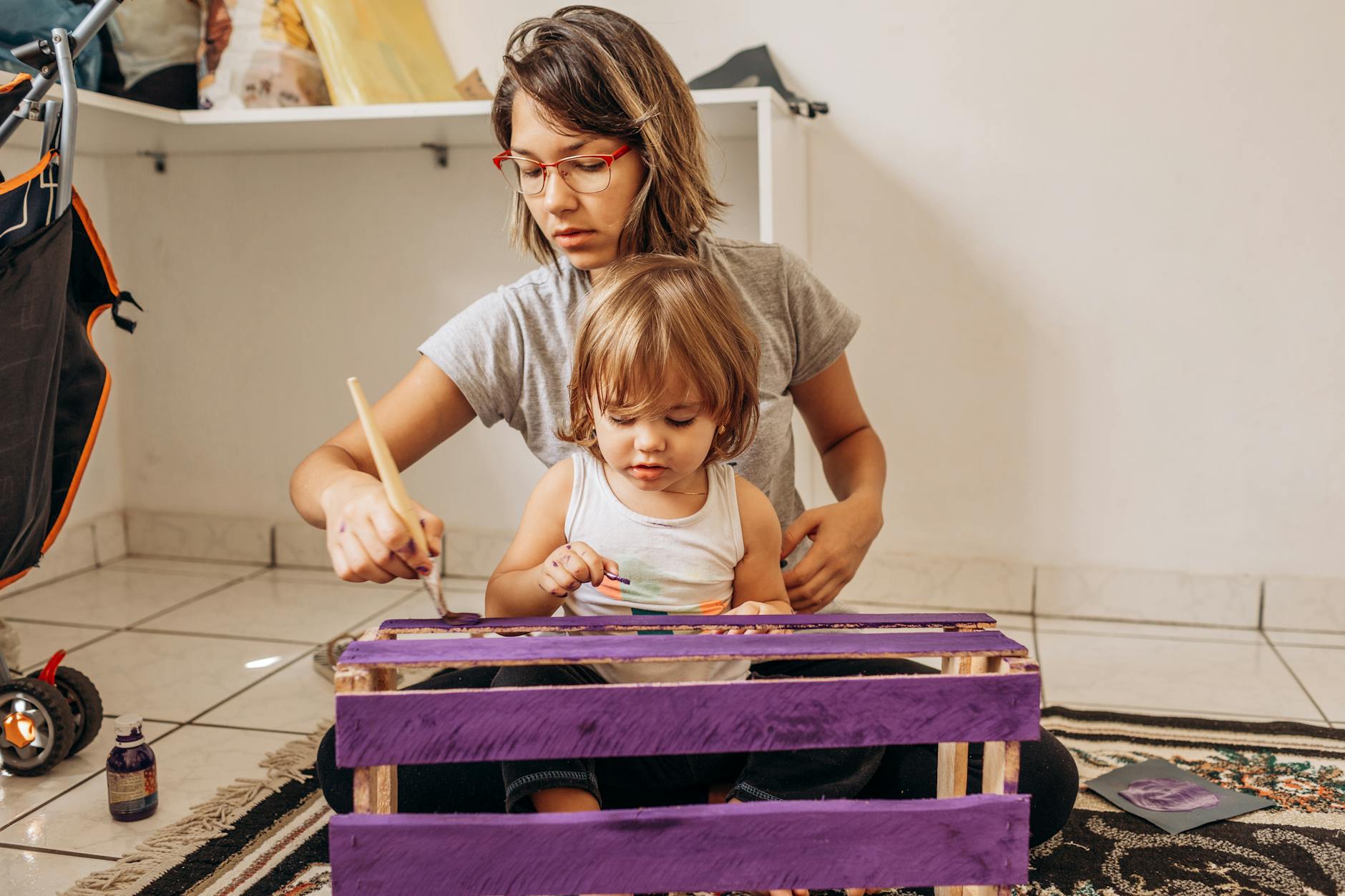
Busy parents juggling work and school routines, along with educators supporting young learners, often run into the same snag. They struggle to find family-friendly home improvement projects that genuinely hold attention across ages. These activities also need to avoid turning into chaos or boredom. Too many “activities” end up feeling like either kid crafts with no real purpose. On the other hand, some activities become adult chores that push children to the sidelines.
The sweet spot is skill-building activities rooted in everyday home life, where intergenerational learning gives kids room for creativity, practice, and pride while adults model patience and problem-solving. Done well, simple projects become reliable rituals for togetherness through projects.
When you want “something to do” to become real togetherness, the best projects are the ones that have clear, age-friendly jobs. There should also be a finish line everyone can celebrate. Pick one weekend-sized win. Then, give each person a role. This makes participation feel meaningful, not optional.
1. Paint a bedroom with a kid-friendly “zone plan”: Choose 1–2 walls or a small corner (like a reading nook) instead of the whole room. Preschoolers can help wash walls with a damp sponge and “vote” on colors using paper swatches. Early elementary kids can apply painter’s tape to a simple shape border. Meanwhile, teens and adults handle edging and rolling. Add a literacy tie-in by labeling the zones together (“reading,” “sleep,” “play”). You can also make a tiny sign for each.
2. Plant flowers and shrubs as a “living calendar”: Start with 3–5 easy plants and a simple map drawn on paper. Young kids dig small holes with a hand trowel, place plants, and water. Older kids measure spacing with a ruler or “hand spans.” Also, adults handle thorny shrubs and any heavy soil bags. Keep a one-page “garden journal” where kids sketch what changed each week. This is great for observation skills and patience.
3. Clean out the garage using a 4-box sorting game: Set a 30–45 minute timer and play music to keep the energy up. Use four labeled boxes: Keep, Donate, Recycle, Trash. Little kids match items to picture labels (balls, bikes, tools). Older kids group like-with-like (sports, painting, camping), and adults make final calls on sharp or hazardous items. This builds decision-making and teamwork. Consequently, it also creates space for safer projects.
4. Build a simple sandbox with clear safety boundaries: Keep it beginner-friendly: a rectangular frame, landscape fabric underneath, and enough sand for a shallow dig zone. Younger kids can help staple fabric (with adult hands guiding), pour sand using small buckets, and decorate the border with smooth stones. Older kids measure and help screw boards together, while adults manage saws and power tools. Add a “construction crew” routine with hard-hat pretend play, job cards, and a clean-up sweep. This lets you practice responsibility.
5. Set up a home theater as a family “design and test” project: Start with what you have: a screen wall, seating, and a plan to reduce glare and improve sound. Young kids can make “quiet cinema” signs and help arrange pillows. Meanwhile, older kids run a simple cable checklist and test volume levels. Adults handle mounting, outlets, and trip hazards. A shared checklist matters because many people have built skills through home projects. In fact, 78% have honed their home improvement skills during the COVID-19 pandemic.
6. Build a treehouse (or platform) in phases, not all at once: Treat this as the advanced project and break it into “design day,” “build day,” and “decorate day.” Little kids can draw what they want (window, flag, book basket). Elementary kids measure boards and pre-drill pilot holes with help. Adults handle structural connections and ladder safety. End with a “first read” or snack up top. This helps the build tie back to togetherness.
When you keep jobs small, visible, and safe, kids learn that home care is something they can do, not just something adults do around them, and that mindset carries beautifully into simple repairs like a supervised plumbing fix.
A simple plumbing repair, like tightening up a leaky faucet or unclogging a drain, turns into a hands-on lesson in practical problem-solving, patience, and teamwork. Kids can help by holding a flashlight, handing over parts, or cheering on the “test run” when the water goes back on. Older helpers can read package labels and talk through what each piece does. The key is to keep the task small and achievable. This way, everyone can share a quick win. As a result, your family will feel more confident tackling basic home maintenance together.
When it’s time to replace a worn part or make a small upgrade, choosing a reputable supplier matters, professional-grade plumbing supplies fit better, last longer, and help the repair go smoothly; see handy resources like this, linked here for reference, when you’re gathering what you need.
Q: What are the best safety rules for kid-involved home projects?
A: Start with a five minute “tool talk” about sharp edges, pinch points, and where hands should go. Set a clear boundary line kids cannot cross and assign one adult as the safety spotter. It helps to remember preventable injuries are a bigger risk than many caregivers realize, so simple routines matter.
Q: How do I include kids with mixed ages and skill levels without chaos?
A: Create three job types: observer (calls steps), helper (fetches, holds, sorts), and doer (uses tools with supervision). Rotate roles every 10 to 15 minutes so everyone gets a turn. Praise effort and teamwork, not speed.
Q: What can I do if my child loses interest halfway through?
A: Break the task into mini goals with quick check-ins and a visible “done list.” Give kids a meaningful choice, like picking the next step to announce or the cleanup song. Short, predictable roles keep attention stronger than long explanations.
Q: When should I stop and call a pro instead of pushing through?
A: Pause if you see active leaks near electrical outlets, smell gas, or need to open a wall. Also stop if stress is rising and instructions no longer feel clear. Calling for help models good judgment, not failure.
Q: How should we handle typical hiccups like the wrong part or a stripped screw?
A: Treat it as a calm troubleshooting drill: stop, identify the problem, then choose one next step. Keep a “reset kit” with extra screws, tape, and a small container for parts. For safety beyond tools, secure firearm storage keeps distractions and risks out of reach during busy project time.
With that in mind: This quick checklist keeps projects calm, teachable, and genuinely fun. Use it to set kids up for real participation, practice communication, and finish with shared pride.
✔ Gather materials + label bins for parts, tools, and trash
✔ Set roles + match tasks to observer, helper, and doer
✔ Set a time plan + choose a clear stop point
✔ Review steps + post a simple picture “done list”
✔ Create a workspace + clear floors and mark a kid boundary
✔ Prepare a reset kit + add extras, tape, and a parts cup
✔ Track teamwork + note one skill each child practiced today
Finish one small section today, and let the confidence carry into tomorrow.
Between busy schedules, limited patience, and kid-sized attention spans, family projects can feel like more stress than together time. The simple approach is to choose one manageable job, keep expectations realistic, and lean on steady teamwork rather than perfection. When that happens, the payoff shows up quickly: skill-building outcomes like measuring, problem-solving, and persistence, plus family bonding benefits that linger after the tools are put away, along with room for encouraging creativity.
Small projects, done together, build big confidence over time. Pick one project to start this weekend and let everyone claim a small role from start to finish. Repeated teamwork turns ordinary home time into long-term learning that strengthens resilience and connection.
Alyssa Strickland created millennial-parents.com for all the new parents on the block. Alyssa believes the old adage that it takes a village to raise a child, but she also thinks it takes a village to raise a parent! Millennial-Parents is that village. Today’s parents can be more connected than ever and she hopes her site will enrich those connections. On Millennial-Parents, she shares tips and advice she learns through experience and from other young parents in three key areas — Education, Relationships, and Community.
Discover how Rainbow Rabbit can inspire and nurture your child’s imagination!
Image via Pexels