Most back-to-school prep focuses on supplies, schedules, and sleep routines. But there is one back to school talk for parents that matters more. And most families skip it entirely.
It is not about grades. It is not about behavior. It is about noticing other people.
Before your child walks into class, take five minutes. Talk about the kid who does not know anyone yet. Talk about the child sitting alone at lunch. Talk about the one who looks a little different. Talk about the one who is scared to raise a hand.
That conversation builds empathy. And empathy helps a child become truly kind, not only successful in school.
Here is how to have it, and why it works.
Every September, classrooms fill with children carrying invisible weights. Some walk into a new school. Some still process a hard summer. Some carry something they have not told anyone yet.
Kids who learn to notice others become better friends. They also help classmates feel safe. According to PBS Parents, teaching empathy helps children build stronger, more genuine friendships from the start.
That work starts at home. Start before the first day.
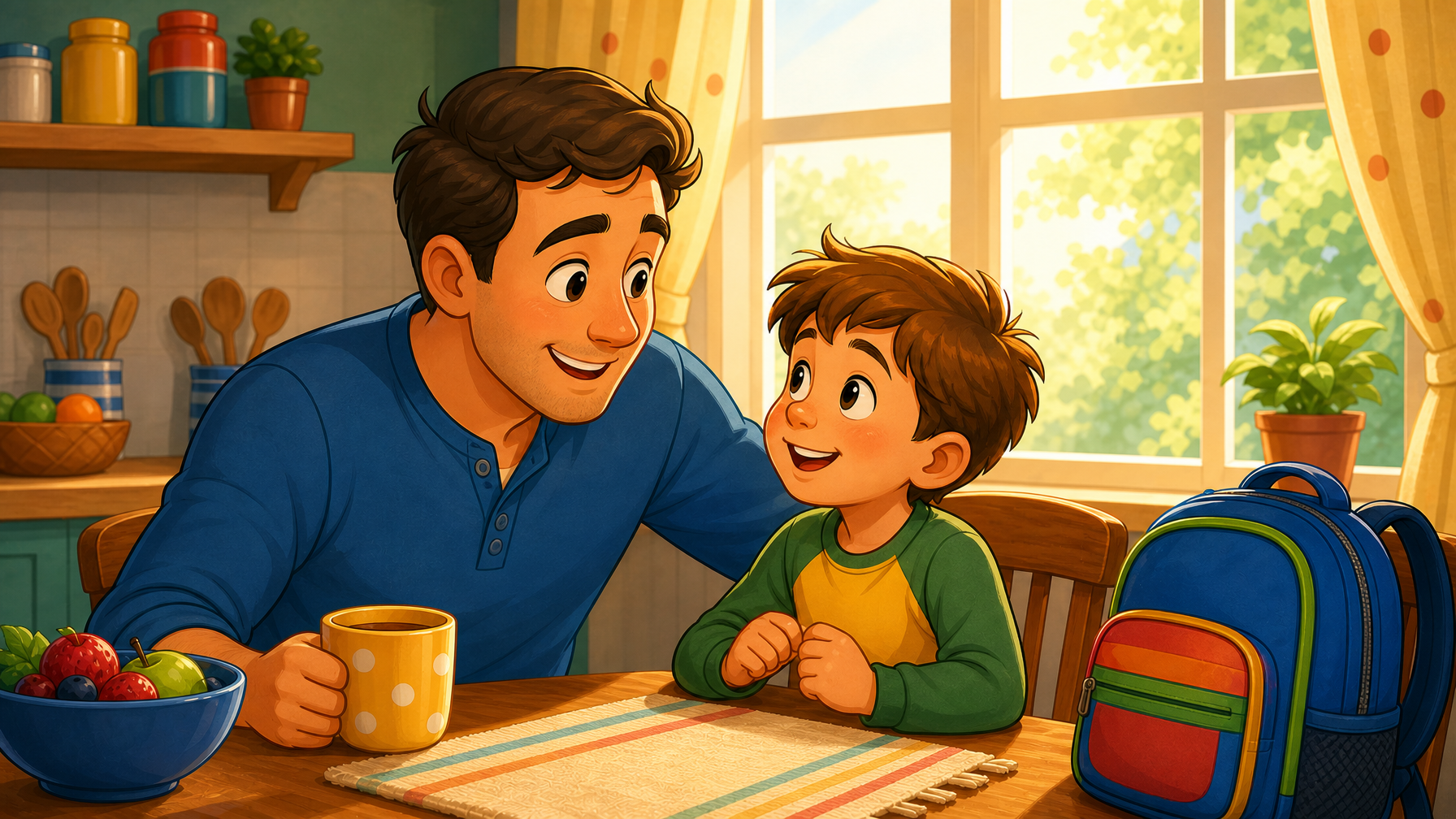
You do not need a lesson plan. You need about five minutes and a quiet moment. Try dinner the night before school. Or try the drive that morning.
Start with something simple. Try: “When you walk in tomorrow, there might be a kid who does not know anybody yet. What do you think that feels like?”
Let them answer. Do not rush it. You are pointing their imagination toward someone else’s experience. That is the core of empathy.
Kids do better with concrete actions than abstract values. Skip “be kind.” Try a small script instead.
Try this line: “If you see someone sitting alone, just sit nearby.”
Then add: “You do not even have to say anything at first.”
Another option works well too. “If someone looks lost in the hallway, ask if they need help finding their class.”
One small action is easier to use in a real moment than a vague rule to “be nice.”
This is the part most parents skip. And it is the most important part. Ask your child: “Is there anything about you that makes you feel different from other kids sometimes?”
Listen. Really listen.
Then share something about yourself. Share a time you felt out of place. Share a moment when someone noticed you and it changed your day. When children see that their parents have felt this too, they stop treating difference like something to fear.
At Rainbow Rabbit, this is the heart of everything we do. Rainbow Rabbit’s story is about a rabbit who looks different from everyone else in Lettuce Valley. The Princess notices him first. That small act of being seen sets the whole story in motion. And it changes everything.
Close with one clear question.
Ask one closing question about tomorrow.
“What is one thing you could do to make someone else’s day a little easier?”
Let them come up with the answer. Whatever they say, affirm it. You are not hunting for the perfect answer. You are building the habit of asking the question.
Children who practice empathy early carry it into real moments more naturally. They scoot over to make room. They laugh with someone instead of at them. They remember the new kid’s name.
These are not grand gestures. They are small, quiet choices. And they add up over a school year. They shape character long after the year ends.
The Confident Parents, Confident Kids organization puts it simply. Compassion in children grows through practice, not lectures. The conversation you have tonight is that practice.
If your child responds well, follow up with a read-aloud. Stories give children a safe way to feel what a character feels. They can be the outsider and the helper, without real-world stakes.
The Rainbow Rabbit Storytelling Coloring Book walks kids through Rainbow Rabbit’s journey page by page. They can color, reflect, and talk about what they would do in his shoes. It is a screen-free way to extend the talk you started at the table.
Back-to-school season puts a lot of pressure on kids. Most of that pressure points inward. Will I fit in? Will I do well? Will people like me?
This back to school talk for parents flips that. It teaches children to look outward. It asks: Who else might be having a hard time? What can I do about it?
That shift, from self-focus to other-focus, is one of the most powerful gifts a parent can give before school starts. And it takes five minutes.
Have the conversation. It costs nothing. And it might be exactly what another child in that classroom needs.
Discover the magic of learning with Rainbow Rabbit, and explore a world where every child’s imagination is celebrated—order the Rainbow Rabbit Educational Program today!