$0.00 0

Cart

No products in the cart.

Our News

Teaching Kids to Share and Take Turns Without Meltdowns

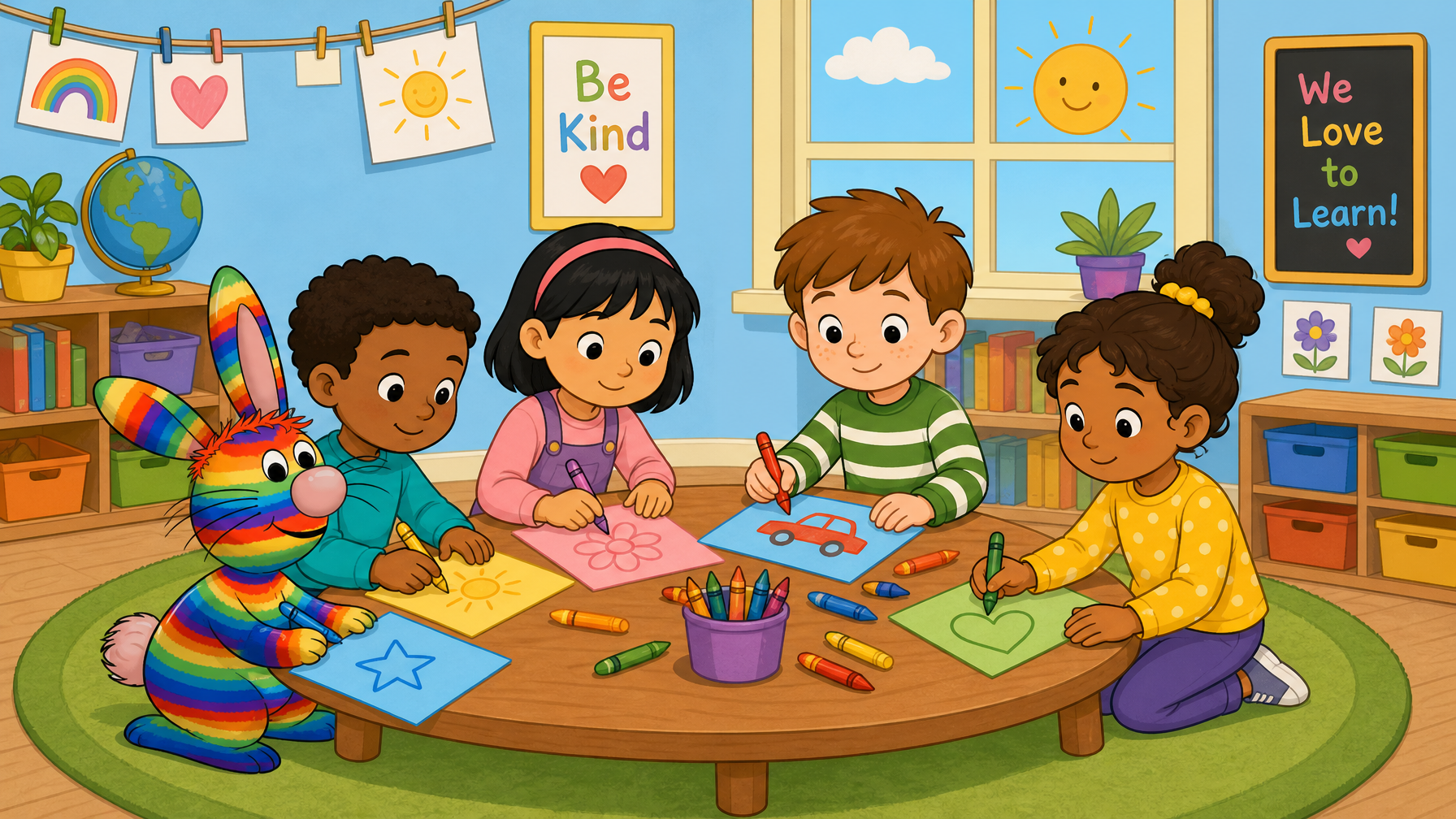
Children sharing art supplies and learning turn-taking in a classroom

Teaching Kids to Share and Take Turns Without Meltdowns

Sharing is one of the first big hurdles children face as they step into social settings. Whether in a Pre-K classroom or during a playdate at home, asking a young child to hand over a favorite toy can feel like asking them to give away a piece of their world. For children between ages three and eight, learning to take turns isn't just about good manners—it is a foundational milestone in social-emotional learning (SEL).

When we teach children how to share willingly, we help them develop empathy, self-regulation, and patience. Here is how you can guide your child through turn-taking without tears or power struggles.

Why Sharing Is So Hard for Young Minds

To help young kids master turn-taking, it helps to understand what is happening inside their developing brains. For toddlers and preschoolers, egocentrism is a normal developmental stage. They naturally view the world from their own perspective and lack the impulse control to wait patiently.

When a child holds a toy, their brain processes it as an extension of themselves. Handing it over feels like a loss. Understanding this shift allows us to replace frustration with compassionate guidance. When we reframe sharing from "giving up something you love" to "taking turns so everyone gets a chance," children feel safe and respected.

3 Gentle Strategies to Practice Turn-Taking at Home

You don't need complicated lessons to build impulse control and social awareness. Here are three simple, practical techniques you can integrate into daily playtime:

  1. Use a Visual Timer for Clear Boundaries: Young children don't have a reliable sense of time. Telling a child "two more minutes" can sound arbitrary. Instead, set a visual sand timer or a friendly chime. Explain: "When the timer rings, it’s Jamie’s turn for five minutes, and then it’s your turn again." Predictability reduces anxiety and builds trust.

  2. Practice Playful Role-Playing with Toys: Use stuffed animals, action figures, or storybook characters to act out turn-taking scenarios. Have two toys both want the same blocks, then brainstorm together: "What should Bunny and Bear do?" Role-playing allows kids to observe social dynamics with zero pressure, making them far more likely to apply those lessons in real life.

  3. Praise the Effort, Not Just the Action: Notice the moment your child successfully waits or hands over a toy. Instead of a generic "Good job," offer specific, warm feedback: "I saw how patiently you waited while your sister finished her drawing. That was so thoughtful!" Specific praise reinforces empathy and positive social connections.

Building Empathy Through Everyday Play

Learning to share is an ongoing journey that requires patience and practice. By modeling turn-taking in everyday routines and engaging in creative play together, you give your child the social tools they need to build strong, warm friendships.

Looking for a fun, screen-free activity that inspires empathy and creativity? Explore The Rainbow Rabbit Storytelling Coloring Book on Amazon—a wonderful way to encourage social-emotional growth through art and storytelling!

Comments are closed

    Contact Us

    Vallee Enterprises, LLC
    935 Locksley Lane
    Woodbury, NJ 08096

    Free Sample Lessons

    Download free samples of Rainbow Rabbit's Educational Program

    Follow Rainbow Rabbit

    Subscribe to our newsletter for all things Rainbow Rabbit!
    ©2026 All Rights Reserved, Rainbow Rabbit.
    website development company new york

    Discover more from The Rainbow Rabbit

    Subscribe now to keep reading and get access to the full archive.

    Continue reading

    Join our newsletter

    Subscribe to our newsletter and follow the adventures of Rainbow Rabbit!