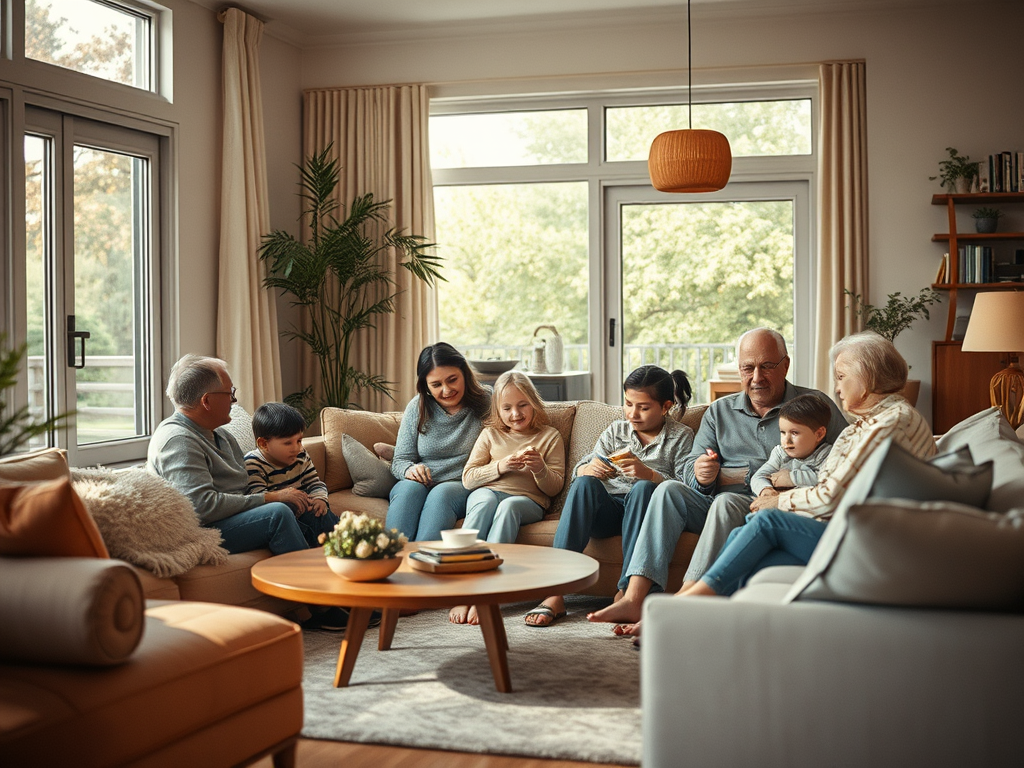
For busy parents balancing remote work, young kids, and eldercare, multigenerational families can sometimes feel like the best idea. At other times, they can seem like the hardest reality. Living with grandparents and children can bring warmth, shared history, and extra hands. However, it can also bring mismatched routines, different expectations, and constant noise that can strain family dynamics.
Intergenerational challenges show up in the smallest moments. They arise over who needs quiet, who needs help, who makes the rules, and who feels overlooked. With a little clarity and a calmer rhythm, the whole household can feel more respectful and more predictable.
A calmer multigenerational home starts with a simple principle: match the house to real human needs. That means creating distinct living spaces. It involves designing shared common areas. Establishing household boundaries is essential so everyone knows where to rest, connect, and reset. Then you support it with short, kind communication habits that keep expectations clear.
This matters because kids learn best when adults feel steady and respectful. Predictable spaces and clear agreements reduce daily friction, so you spend less time correcting and more time coaching confidence. It also protects relationships by making limits feel normal, not personal.
Imagine your home as a school day. It has quiet corners for focus and a cafeteria for community. Simple rules are posted where everyone can see them. When you pair that with thoughtful design for personal privacy, a busy house can feel surprisingly peaceful. This step-by-step plan turns those boundaries into practical spaces, routines, and accessibility upgrades.
This plan helps you turn “we need better boundaries” into real-life rooms. It helps you create systems and habits that support everyone from kids to grandparents. When the setup is clear and fair, children can practice kindness. They gain confidence because they know what to expect. This clarity helps them understand how to contribute.
Choose at least one defined retreat spot per generation. It can be as simple as a corner with a screen, headphones, and a basket of calming items. Prioritize rooms that can adapt to various uses. A play area can later become a teen study nook. It can also transform into a caregiver rest space. Label these zones with simple house language like “quiet room” or “door closed means pause.”
Walk the most-used paths. Focus on paths from the bedroom to the bathroom or kitchen to the living room. Remove trip hazards like loose rugs and cords. Clear cluttered corners. Add small supports that reduce strain. Install brighter night lighting. Provide a stable chair for putting on shoes. Store frequently used items at waist height. When kids help set up safety, they learn thoughtful responsibility without fear.
Give every person one “drop zone” for their essentials. This includes items such as keys, meds, school papers, and chargers. Provide one “closed bin” for personal items. Use picture labels for younger kids and clear categories like “today,” “this week,” and “not mine.” A calmer floor plan plus predictable storage cuts down on nagging because the system does the reminding.
A: Think “wide, bright, stable”: clear pathways, stronger lighting, and sturdy seating at key spots. Store daily items between knee and shoulder height, add non-slip mats, and keep floors toy-free with a nightly sweep. Kids can help by being the “pathway helper,” building kindness through safety.
A: Give everyone one labeled landing spot for essentials. Provide one bin for personal clutter. Then make “return to home” the rule. Use simple categories like “now, later, donate” to prevent decision fatigue. A five-minute family reset at the same time each day keeps overwhelm from piling up.
This checklist turns good intentions into routines your whole family can follow. When kids see adults using respectful boundaries and predictable systems, they practice kindness and grow confidence right alongside you.
Pick one item today and celebrate the follow-through.
When multiple generations share a home, it’s easy for love and logistics to collide. Different routines, noise levels, and expectations can leave everyone feeling tense. A calm home comes from a steady mindset. Organize the spaces and clarify roles. Keep communication simple and kind. This way, support replaces guesswork.
Over time, the benefits of multigenerational living show up more clearly. Families experience stronger connections and more confident parenting. They create supportive home environments where kids and adults can breathe. One small, consistent change creates positive multigenerational dynamics. Choose one item from the checklist today and try it for a week. That tiny follow-through builds the stability and closeness families need to grow well together.
Cassidy Gibson-Cooper and Tim-Gibson Cooper founded Parenting Central to share practical advice with modern parents. They are proud parents to Sam and co-parent Autumn with Cassidy’s former partner, and hope to create a supportive space for families to connect and learn.
Discover the magic of learning with Rainbow Rabbit,explore a world where every child’s imagination is celebrated.
RECENT NEWS: Rainbow Rabbit Is Now a Part of the Strong Museum!